
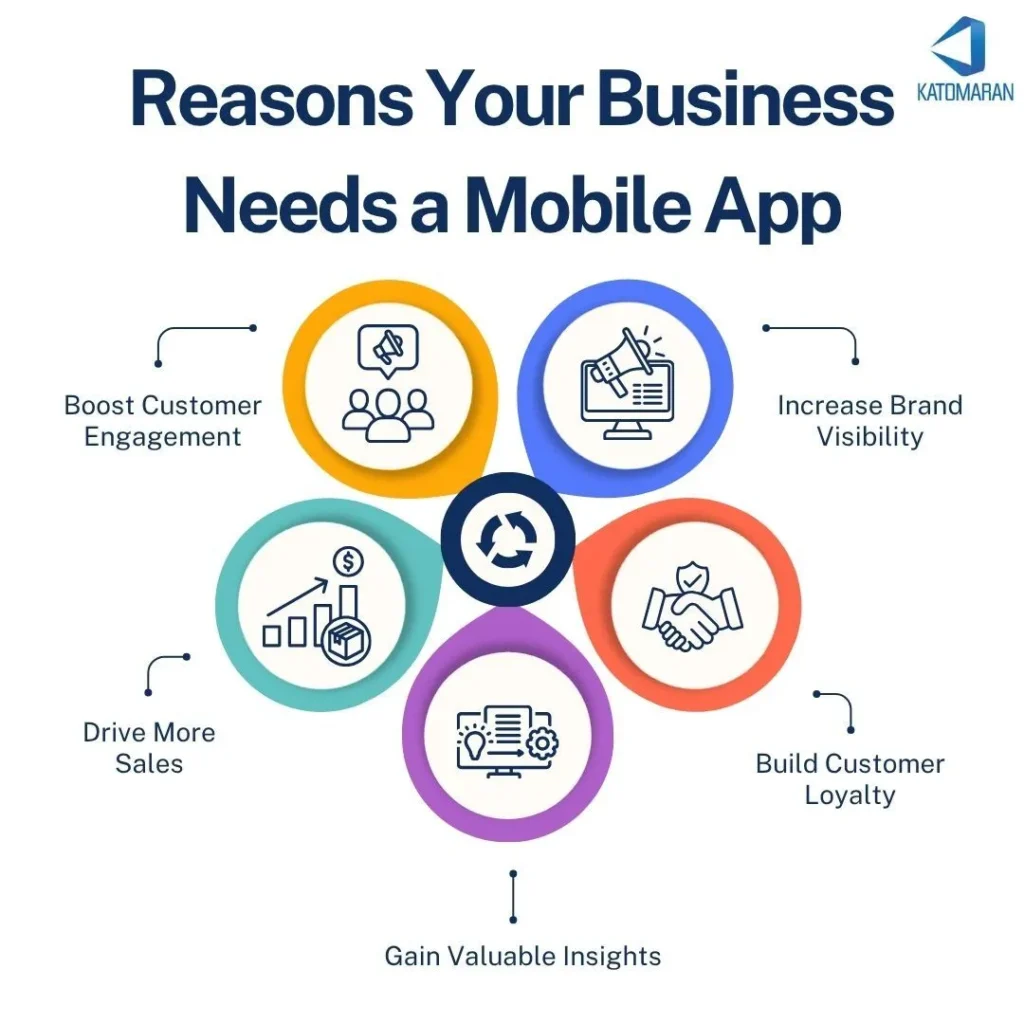
Mobile applications have become an integral component in the communication, operations, and service delivery of many businesses. Given that mobile phones are indispensable and have become the primary source of internet access, more and more businesses are looking towards mobile applications to enable their customers to access their products, services, and information more conveniently.
Not just the leading tech-companies or e-commerce firms, but businesses in diverse sectors like education, healthcare, retail, hospitality, logistics, finance, real estate, professional services, etc. Can develop and utilize mobile applications to enhance their business operations and customer interactions.
The adoption of mobile applications in businesses is more about achieving a higher level of connectivity and personalized user-interface for their customers and even employees, rather than just having another channel.
Why are Mobile Applications Important for Businesses?
While a website offers extensive information and functionality, an application on a mobile device provides a more tailored experience dedicated to specific users or specific business processes. Mobile applications can offer numerous additional features to the user such as profile management, payment facilities, chat, booking tools, notifications, etc, which are generally not available through a website.
Such flexibility makes a mobile application beneficial both in customer-facing applications and internal business operations.
1. Customers Have Easier Access to Business Services
A mobile application can allow users to access a business’s services much more conveniently from their mobile phones. Users are able to manage or utilize particular aspects of their interaction with a business simply through their application rather than needing to log onto a website and browse through pages of information every time. For instance, business applications may allow customers to view pending orders, book appointments, make transactions, browse catalogs for their respective services or products and even manage their profiles from a single platform.
2. Personalised User Experiences can be delivered via mobile applications
Mobile applications can be customized based on the user’s requirements. A business can build an application with features such as customized dashboards, personal profiles, targeted recommendations, alerts, preferred saved settings, order history and booking information, and so on, tailored around the users’ interactions with the application itself. A user may have their very own personalized applications experience tailored to their usage.
3. Push Notifications
Push notifications provide an effective and non-intrusive way for a business to communicate important messages to their users’ mobile devices through their application. Such notifications may consist of transactional messages about the status of an order placed through the application or a booking reminder. While notifications can provide useful information and improve timely communication, it is important for a business not to over use and rather reserve them for informative purposes.
4. Business Services can be accessed from single-point mobile application
A mobile application can also be a centralized hub for different services a business provides. It can include features such as customer profiles, product catalogs or service listings, booking systems, online payment facilities, communication tools for support or with the staff, order or service tracking features, etc., all available from one location. For example, an e-commerce business may incorporate product listings, a shopping cart and payment features to enable a seamless online purchase process.
5. Mobile Applications can improve internal business operations as well
Mobile applications don’t just extend to customer use. Businesses can even develop an application for their staff or internal teams. Internal business applications can be useful for things like managing tasks, tracking attendance and locations of field workers, updating inventories, managing customer visits and feedback, handling requests and approving purchases, team collaboration etc., especially when staff need access to business applications and data away from the office.
6. Mobile applications can integrate with business systems
A modern mobile application often includes connectivity with the businesses’ existing systems such as CRM, ERP, or a database through a platform called an API. An API lets different applications communicate with one another in a defined way and ensures seamless transfer of information between the business’s applications and systems. For instance, when an order is placed via the mobile application, it automatically gets sent to the backend of the business for further processing.
7. Convenient payments can be facilitated through mobile apps
Businesses dealing with a selling and purchasing activity can facilitate payment through their mobile applications too. A well-designed transaction interface on an application can not only enhance the ease of payment for the customer, but can also allow business users to manage payment details effectively through relevant business systems.
8. Location-based services may be added using the mobile’s features
Most mobile phones are equipped with location based features which can be beneficial for a variety of applications. These could include map-related features to locate directions and routes, enable tracking of deliveries, specify service areas and points of interest etc. It allows field service providers to manage their services better and helps customers get access to location-specific details they need.