
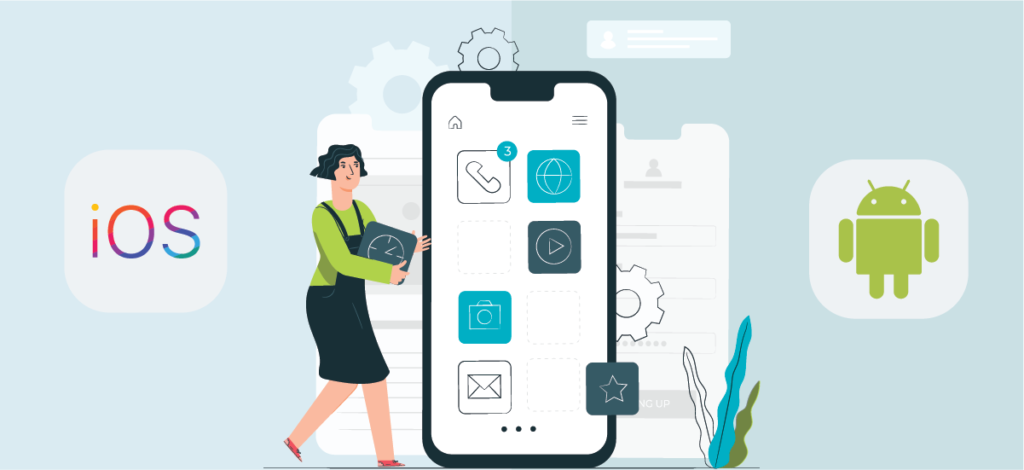
When you’re deciding to create a mobile app, your business will face an important question: should you build for Android, iOS, or both? The right choice isn’t the same for everyone; it depends on your target audience, application needs, business model, budget, features, and future plans.
While both are extremely popular mobile platforms, they operate under distinct ecosystems, use different development environments, involve different devices to consider, and offer unique user experiences. Understanding these distinctions will guide you to the right decision for your app before development even begins.
Why Does Platform Selection Matter?
The mobile platform you select can impact various aspects of your application, from development and testing to device compatibility, user experience, and maintenance over time.
By thoroughly understanding your users and application requirements beforehand, businesses can make more educated and effective technology choices. Sometimes, starting with one platform might be the logical first step for a business, whereas for others, immediate availability on both Android and iOS is a necessity.
Android App Development
Android is the most widely used mobile platform, with devices offered by a vast array of manufacturers, each coming in various specifications, screen sizes, and price points. Android app development can cater to diverse businesses, including e-commerce, education, healthcare, logistics, retail, finance, hospitality, real estate, and professional services. Android development is a sound option if your objective is to reach a broad audience across numerous devices and implement functionality tailor-made for the Android environment.
Android Development Considerations
Since Android apps need to be compatible with numerous devices, developers must address issues like screen sizes, hardware specifications, different OS versions, device capabilities, and overall compatibility. Consequently, rigorous testing across relevant devices and configurations is essential throughout Android app development.
IOS App Development
iOS is Apple’s mobile operating system and is exclusively used on Apple’s array of supported mobile devices. For businesses seeking to provide a tailored application experience to their Apple device-using customers within the iOS ecosystem, iOS app development is the way to go. IOS applications are well-suited for e-commerce, finance, healthcare, education, business services, booking applications, social platforms, and much more.
IOS Development Considerations
In contrast to Android, the iOS ecosystem is much more standardized between software and hardware. However, developers still need to account for factors like supported OS versions, specific device models, screen sizes, unique app requirements, and Apple’s development and distribution procedures. Testing to ensure optimal performance on supported devices and operating system versions remains crucial for iOS apps.
Android vs iOS: Key Differences
Here’s a look at the main differences in Android and iOS development:
* Device Ecosystem: Android apps often need to be compatible with devices from numerous manufacturers that vary in their hardware capabilities. IOS apps, on the other hand, are built for Apple’s ecosystem, where hardware and software are more closely integrated and controlled. This disparity directly impacts testing and compatibility efforts.
* User Interface: Both platforms have unique design guidelines and platform-specific interaction principles. An app that targets both platforms must accommodate these differences to create a user experience that feels native to users on each respective platform. It’s more than just displaying the same UI on every screen.
* Development Environment: Android and iOS rely on entirely different development environments, frameworks, tools, and platform-specific technologies. The choice will be dictated by your specific application requirements and the development approach your team selects.
* Testing Requirements: The broad range of Android devices can demand more extensive testing across diverse configurations and OS versions. While iOS apps typically have a more limited set of hardware, testing across supported devices and operating system versions is still essential to cover functionality, usability, performance, navigation, and integrations.
Should Your Business Choose Android or iOS?
There’s no one-size-fits-all answer, but the primary factor in your decision should be your users.
Understand Your Users First. If the majority of your existing customer base predominantly uses one mobile platform, launching your app on that platform first is often a practical approach. Research where your target audience is located, what devices they typically use, and how they are expected to engage with your application.
Consider the Application Itself. For instance, an internal business tool might have entirely different requirements than a customer-facing e-commerce app.
When is Android Development a Good Fit?
* Your target audience primarily uses Android devices.
* You need to reach users on a wide variety of device categories.
* Your app’s functionality is intrinsically linked to Android-specific features.
* Your business already has an established presence with an Android user base.
* You intend to incorporate Android-exclusive features into your application.
Keep in mind that the ultimate decision should always align with actual user and business needs.
When is iOS Development a Good Fit?
* Your target customers predominantly own Apple devices.
* Your business has an existing base of iOS users.
* You want to create an app designed exclusively for the Apple ecosystem.
* Your initial product launch is targeted towards iOS users.
* Your application requires features unique to iOS functionality.
Again, this decision hinges on the specifics of your project, not just choosing a platform.
What If You Need Both Android and iOS?
For many businesses, the desire to have their application available on both of the major mobile platforms is a key goal. This can be accomplished in two main ways:
1. Separate Native Apps: Build distinct native applications for both Android and iOS. This approach allows for maximum control over each platform’s design and functionality, enabling each app to adhere to its native ecosystem conventions.
2. Cross-Platform Development: Utilizing cross-platform technologies allows you to write a single codebase that can be compiled and run on both Android and iOS.